
New Guide Maps the Ways Into Law School Without the LSAT, Then Tells Most Readers to Take It Anyway
Just another WordPress site
Press Release Disclaimer: This is a press release distributed through the XPR Media network. It has not been independently verified by our newsroom.
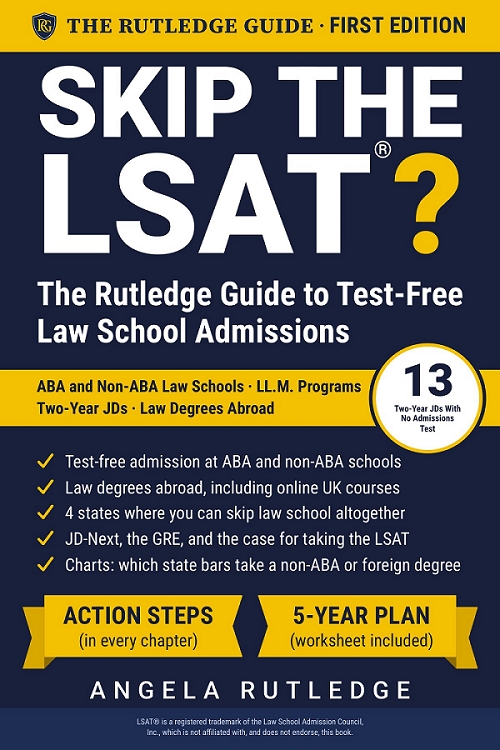

UNITED STATES – October 19, 2026 – Most people who want to become lawyers should take the LSAT, says Angela Rutledge, an attorney in tribal courts who has never sat it. Her new book, Skip the LSAT? The Rutledge Guide to Test-Free Law School Admissions, is written for the smaller group who want a law degree without the test, and it tells them plainly what each test-free route will cost them.
The book arrives at an unsettled moment for legal education. Since November 2024, the American Bar Association has let the law schools it approves apply for permission to admit students with no admissions test, and the ABA’s own notices list 23 schools granted that permission by August 2026. On July 1, 2026, Grad PLUS loans closed to most new law students, and federal borrowing for a professional degree is now capped at $50,000 a year and $200,000 in total. State courts are changing the rules too. Ohio, Florida, and Tennessee amended their rules this year on which law schools qualify a graduate for the bar, and Washington State’s bar now accepts some graduates of law schools approved by another state. In Florida and Tennessee, no accreditor other than the ABA has been approved yet.
Skip the LSAT? turns those changes into routes a reader can check against their own life. It covers test-free admission at ABA-approved and non-ABA law schools, and what a non-ABA degree will and won’t let a graduate do. It explains law degrees earned abroad, including UK conversion courses taught online, and the choice between an LL.M. and a two-year JD for readers who already hold a foreign law degree, with 13 two-year JD programs that list no admissions test requirement. It names the four states where a person can qualify for the bar by studying in a law office, and it gives JD Next and the GRE a fair hearing for readers who will sit some test. Six flow charts trace individual routes from the first application to bar admission, four maps place every state and the District of Columbia by how it treats non-ABA and foreign law degrees, and a closing chapter walks the reader through a five-year plan with a worksheet.
Rutledge does not sell any of it as a shortcut. Each route trades the test for something else, and the book prints the trade beside the route. On the February 2026 California bar exam, first-time takers from California-accredited law schools passed at 29.7 percent, against 62.9 percent for graduates of ABA-approved schools in California. A full chapter, “Why You Should Really Consider Taking the LSAT,” argues the other side, including what the new loan limits mean for a student who needs scholarship money to make law school work.
“Seriously, 95 percent of you should take it and be done with it,” Rutledge writes in the book’s prologue. “But where are the resources for the 5 percent who don’t want to take it? . . . I couldn’t find them. So I made one, and this is it.”
Rutledge started law school at 41, with three children under three, while working full time as her family’s breadwinner. She studied online and part time for an LLB from the University of Law in England, then earned an LL.M. from George Mason University’s Antonin Scalia Law School. She works as a court-appointed criminal defense attorney for a Nebraska-based Tribal Court. She is tribally admitted and is not admitted to the bar of any state.
“I have sat the GRE and JD Next myself, so I know those tests firsthand, and I checked every rule in this book against its source,” she says.
Every rule, price, and deadline in the book is cited to its source in the endnotes, so readers can check them for themselves. Rutledge posts corrections and updated lists at rutledgeguide.com/skip as rules change.
Skip the LSAT? is available now on Amazon in Kindle ($12.99) and paperback ($17.99) editions, published by Tovinate LLC. An audiobook narrated by the author is planned for Audible November 1, 2026. A large-format companion, Skip the LSAT? Companion Workbook: The Rutledge Guide to Law School Readiness ($24.99, paperback), gives readers write-in pages for testing whether they are ready for law school and which route fits their life.
Book: Skip the LSAT? The Rutledge Guide to Test-Free Law School Admissions
Author: Angela Rutledge @angelawclerk – https://www.tiktok.com/@angelawclerk
Where: Amazon. Kindle $12.99, paperback $17.99. An audiobook narrated by me is coming to Audible.
Link: https://link.amazon/B0id27RWC
What it is: A practical guide for people who want to go to law school but don’t want to take the LSAT, or tried and couldn’t face it. It lays out the real routes: test-free admission at ABA and non-ABA law schools, LL.M. programs, two-year JDs, and earning a law degree abroad.
Who is it for: Career changers in their 30s to 50s, parents, and anyone who has been told the LSAT is the only door.
Why is it different: It’s honest about which routes actually work and which ones the internet oversells. It even includes a chapter on why some readers should take the LSAT anyway. It comes with color-coded maps of state bar rules, route flow charts, and a five-year plan worksheet.
About the Author
Angela Rutledge started law school at 41 with three children under three, earned an LLB from the University of Law in England and an LL.M. from George Mason University’s Antonin Scalia Law School, and has never sat the LSAT. She works as a court-appointed criminal defense attorney for a Nebraska-based Tribal Court. She previously served as the Writer-in-Residence for the DC Bar and has written for Above the Law and Washington Lawyer Magazine.
For more, send an email via press@rutledgeguide.com.
Media Contact
Company Name: Angela Rutledge
Contact Person: Media Relations
Email: Send Email
Phone: (610) 314-0685
Country: United States
Website: http://rutledgeguide.com/skip
Press Release Distributed by ABNewswire.com
To view the original version on ABNewswire visit: New Guide Maps the Ways Into Law School Without the LSAT, Then Tells Most Readers to Take It Anyway
